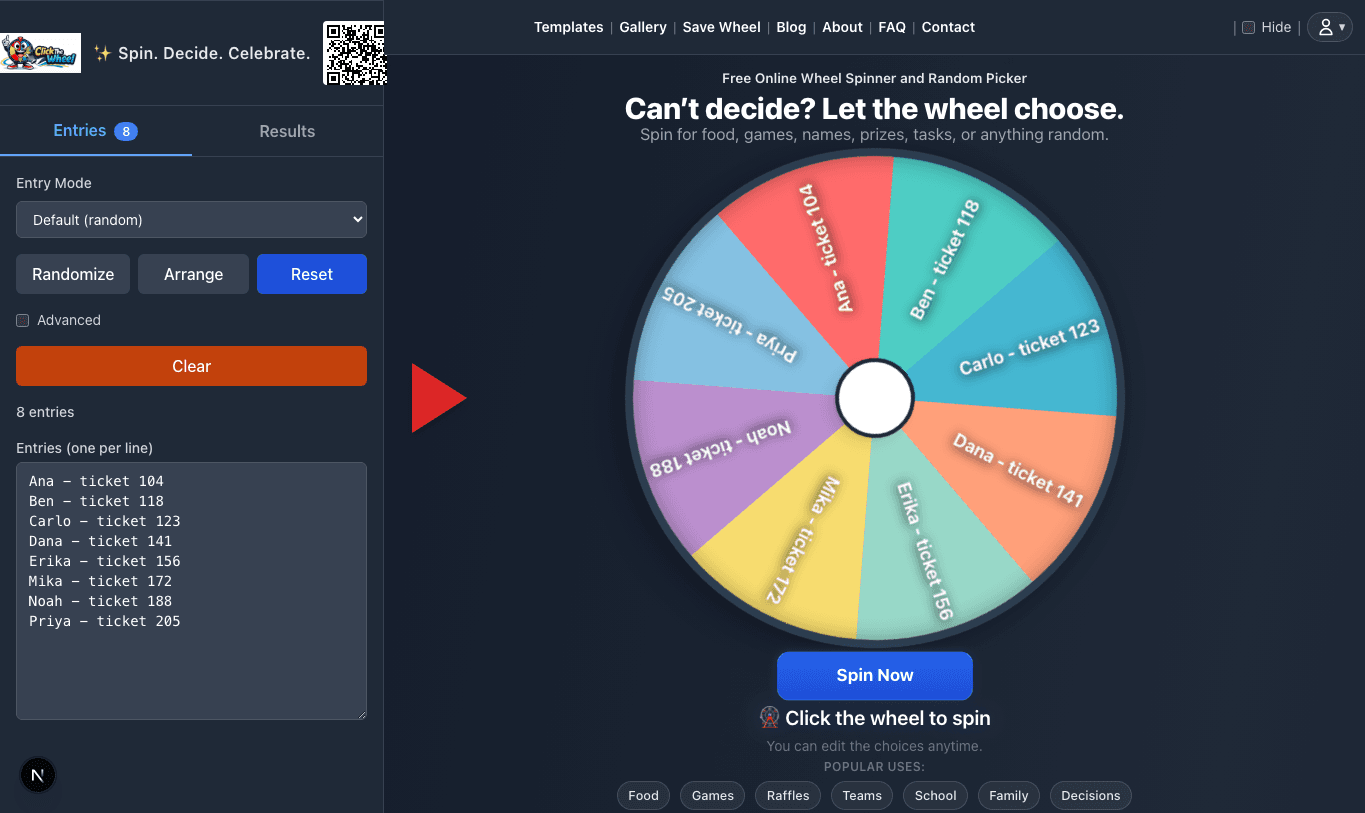
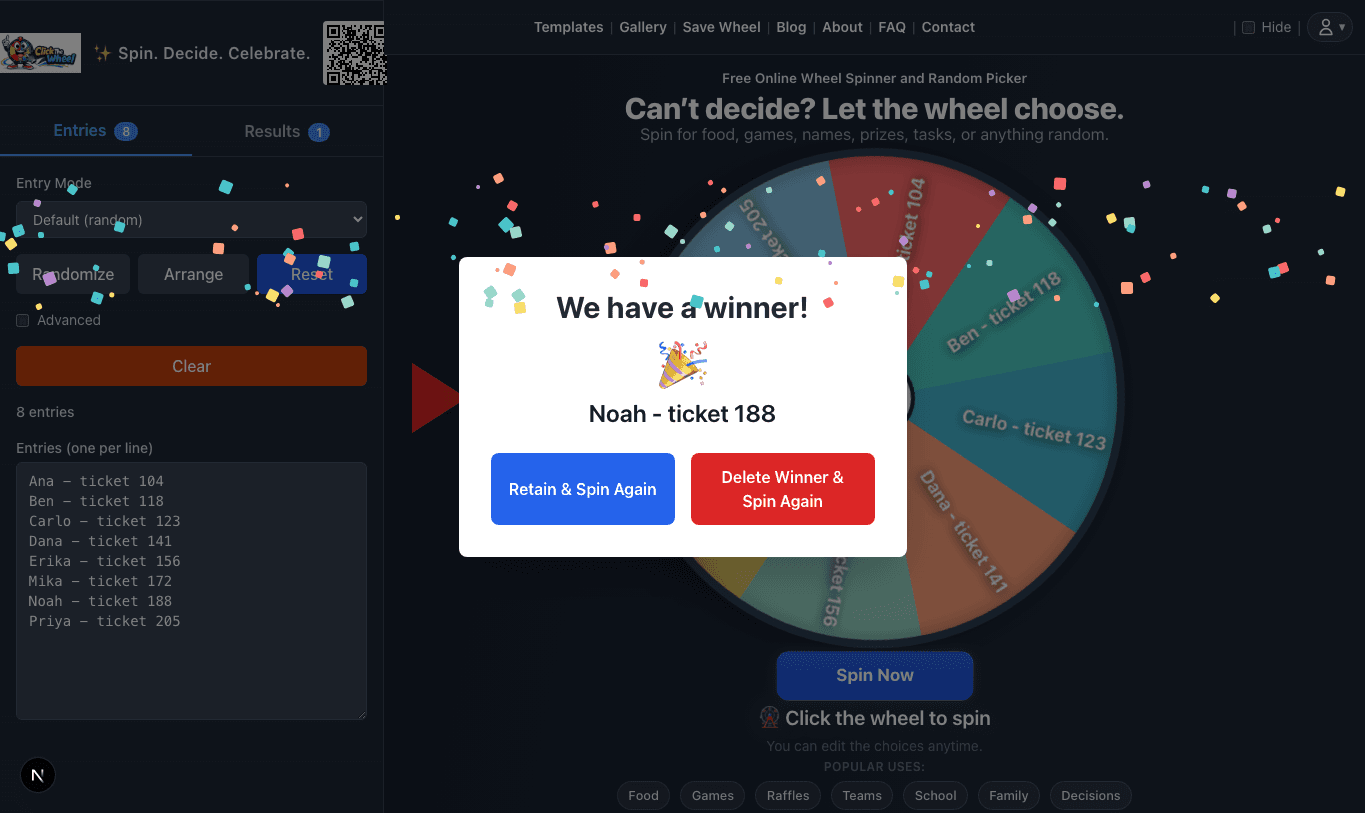
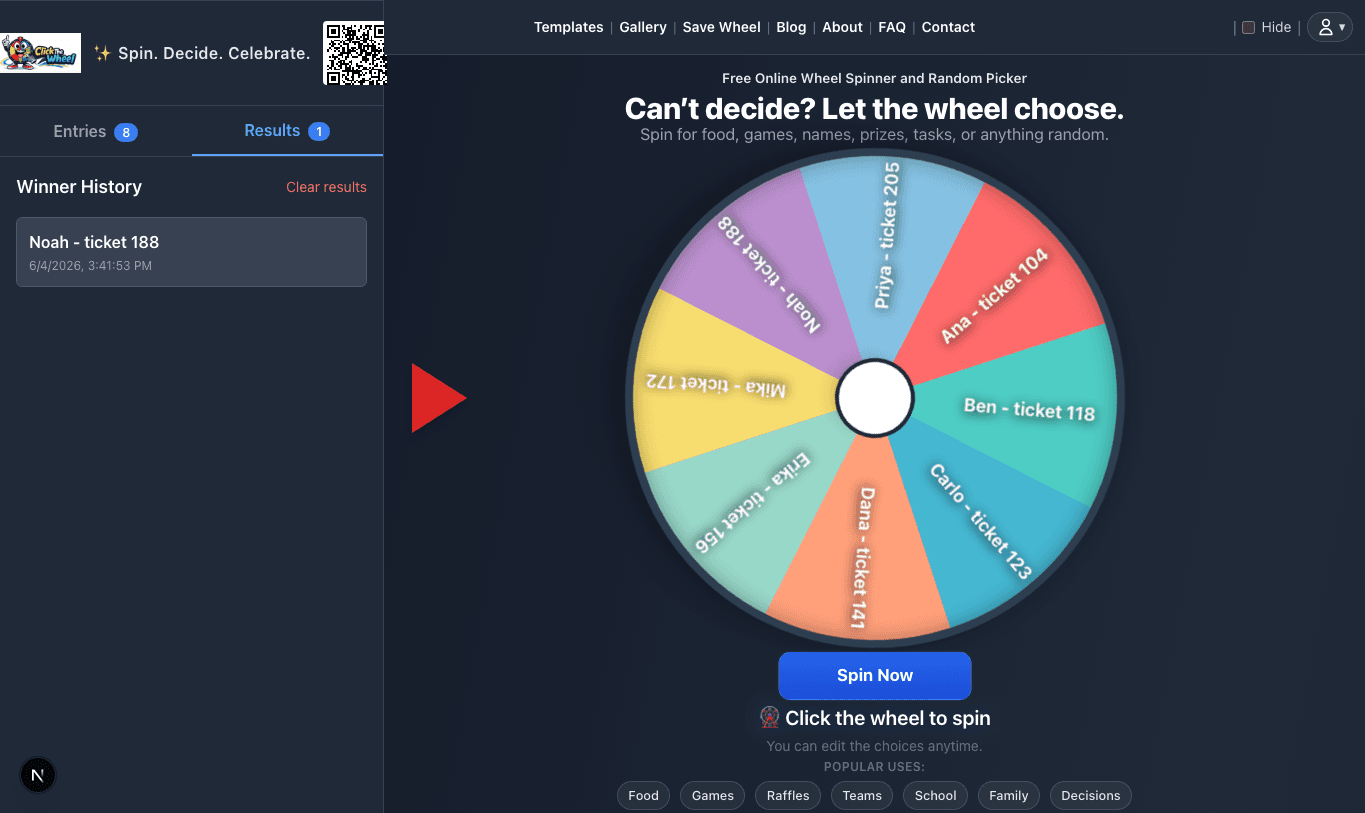
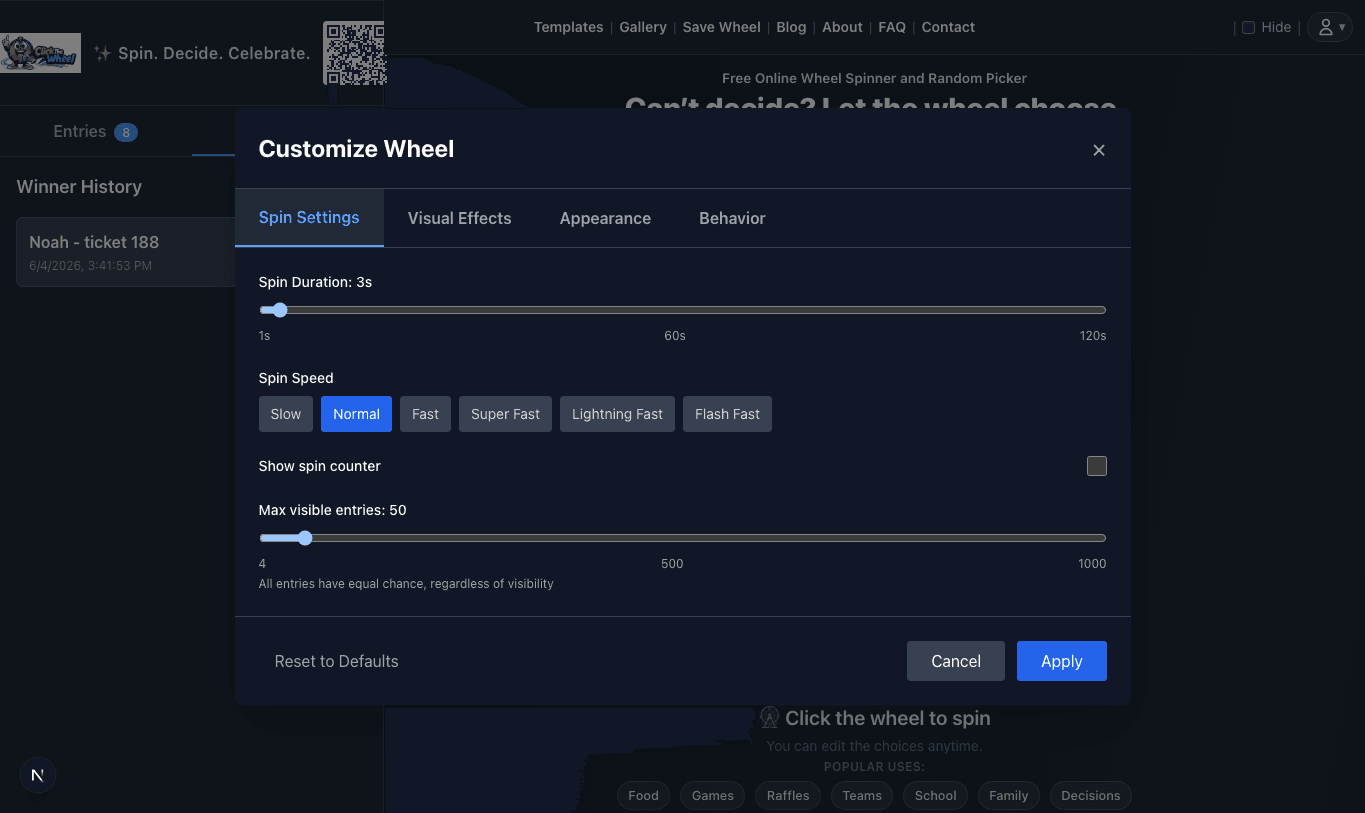
These are not just keyword categories. Each example below describes the kind of list to prepare, the rule to say out loud, and the boundary that keeps the spin useful.
Contests & Giveaways
Use the wheel only after the entry list is final. For example, export eligible usernames, remove late comments, decide whether bonus entries count, show the final count, then record the spin if the prize has public value.
Ticket 014Viewer 117@maria_pPrize 1 drawBackup winnerSponsor item
Decision Making
Use the wheel for small decisions where everyone can live with the result. Before spinning, remove closed restaurants, expensive choices, repeat movie picks, or plans that do not fit the time you actually have.
Tacos nearbyCook at homePark walkBoard gameEarly movieLeftovers
Team Selection
Add presenters, table groups, volunteers, or team names. Remove selected names when everyone needs one turn before repeats, such as presentation order, cleanup roles, or debate pairings.
Group 1Team BlueDemo orderGreeterTimekeeperPairing round
Games & Entertainment
Prepare prompts before the gathering starts so the host is not inventing awkward dares on the spot. Keep passes allowed, remove unsafe prompts, and decide whether funny repeats are allowed.
One-word clueDraw blindfoldedPass allowedTrivia topicSilent roundTeam choice
Business & Professional
Use it for light work moments: who demos first, which retro prompt starts the room, which agenda item gets the last five minutes. Keep hiring, performance, sign-offs, and incident decisions out of random selection.
Demo orderRetro promptAgenda timeboxCoffee raffleWorkshop tableTraining drill
Personal Planning
Write tasks small enough to start right away. "Open the budget sheet" works better than "fix money." "Read 10 pages" works better than "study." The wheel should remove friction, not create a vague command.
Read 10 pagesWash dishesInbox 15 minWalk outsidePlan tomorrowReview notes
Education & Learning
Use it for participation order, vocabulary review, reading turns, lab stations, or classroom jobs. If the class is anxious, spin for the prompt first and let students volunteer after they see the question.
Seat 12Table 3Vocabulary wordLab stationReader 2Brain break
Yes/No Decisions
Use Yes/No mode only when both answers are genuinely acceptable. Decide what "yes" means before the spin, especially for spending, schedule changes, or plans that affect other people.
Order dessert?Take the scenic route?Watch one more episode?Reschedule?Cook instead?Start now?
Travel & Tourism
Use a travel wheel after you know the weather, opening hours, distance, and budget. Put realistic stops on the wheel: one museum, one food market, one park, one rest break, one backup indoor plan.
Museum morningFood marketTaxi or trainRain backupCoffee stopEarly dinner
Friends & Social
Use it when the group is stuck between acceptable choices. Have everyone add one option, remove anything too far or too expensive, then agree before spinning whether the result is final.
ArcadeCoffee shopKaraokeLate dinnerWalk by the bayMovie night
Family & Household
A household wheel works best when the list is honest. Do not include chores nobody has time to finish today. Do include small jobs, weekend options, and rewards that are actually available.
TrashFold towelsWater plantsPancake breakfastPark tripGame night
Health & Fitness
Use it for gentle prompts you can adapt safely: stretching, walking, water breaks, or short home movements. Do not use a wheel to replace medical advice or push through pain.
Shoulder stretchWalk 10 minDrink waterBreathing breakLight squatsRest day
Pets & Animals
Use a pet-care wheel for harmless variety: which toy comes out, which short command to practice, or which walking route to take. Keep health, diet, and safety decisions with a veterinarian or trained professional.
Sit practiceToy rotationShort walkBrush coatPuzzle feederQuiet time
Creative & Content
Use it to start, not to outsource taste. Spin for one prompt, thumbnail review, title angle, editing pass, or first draft focus. Remove ideas that do not fit your audience before the wheel decides.
Cold openThumbnail checkCut introStory promptTitle angleDraft outline
Sports & Recreation
Use it for practice variety after the coach has already chosen safe drills. A wheel can rotate warmups, scrimmage roles, or skill stations, but it should not decide medical return-to-play calls.
Layup drillPassing stationGoalie warmupCooldown walkTeam A servesStretch block
Study & Learning
Build the list from today's material, not a whole semester. Spin for flashcards, a practice quiz, a chapter section, or a short break so the next action is specific.
Flashcards 10 minChapter 4 notesPractice quizEssay outlineBreak walkFormula review
Business & Operations
Use operational wheels only for drills, training, or low-risk ordering. Real incidents, sign-offs, safety work, and customer-impacting choices need policy, owner judgment, and a written process.
Practice scenarioOn-call drillChecklist orderRetro themeRunbook quizTabletop exercise
Holidays & Celebrations
Use it for low-pressure celebration planning: gift themes, dessert order, party games, or who opens the next present. Set budget and comfort rules before any holiday exchange draw.
Gift themeDessert orderPhoto boothSecret SantaCleanup helperSong pick
Kids & Parenting
Use it for choices children can safely accept: bedtime story, cleanup job, art activity, or weekend game. Keep discipline, punishment, and sensitive family decisions away from the wheel.
Story pickToy cleanupColoringOutdoor playSnack helperPuzzle time