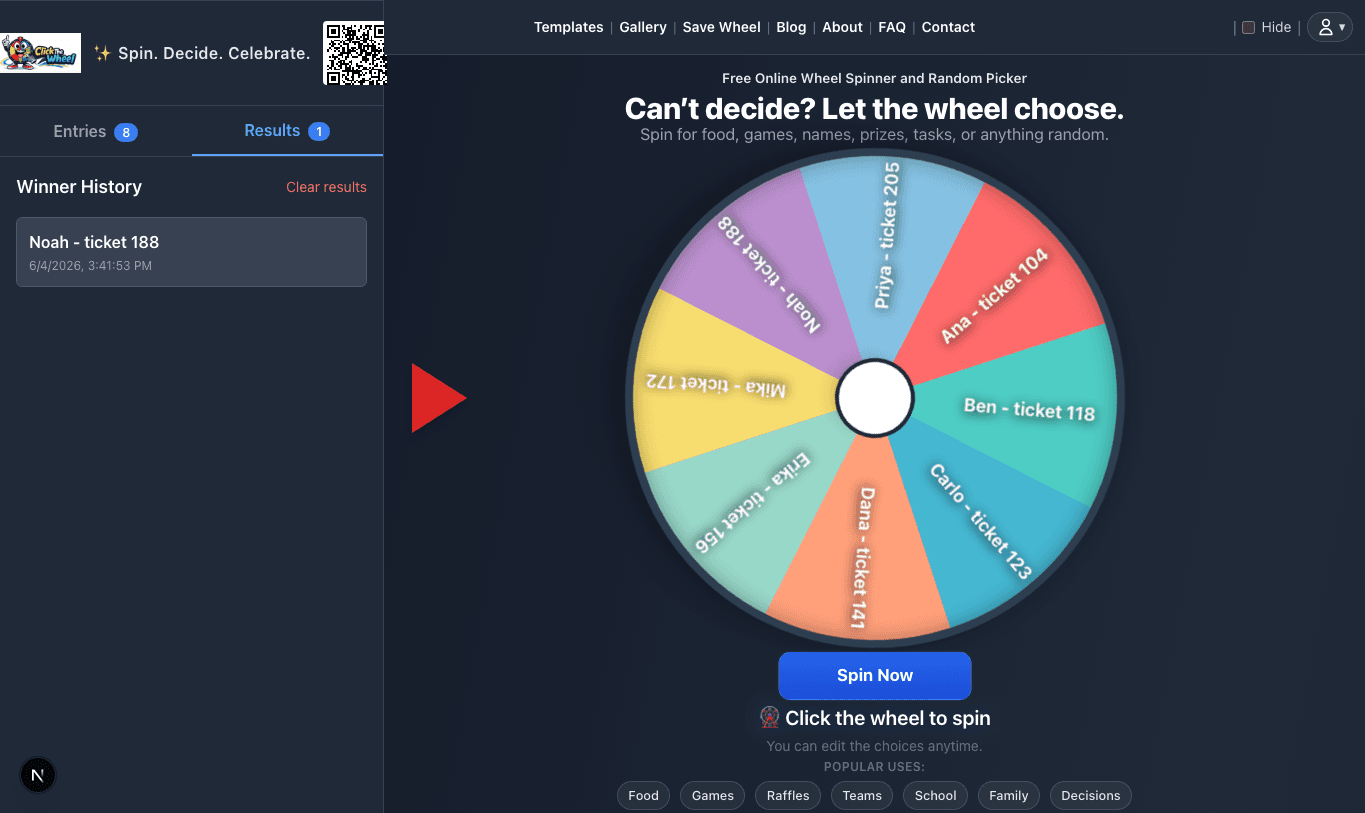
The list defines the odds
A wheel can only choose from the entries on it. If one username appears twice, it has two chances. If an eligible ticket never made it onto the list, the wheel has no way to select it.
Randomness and fairness
ClickTheWheel is a browser-based random picker. It helps choose one visible result from the entries you provide, but the usefulness of the result depends on the list, duplicate rules, and setup decisions made before the wheel moves. The wheel cannot repair a messy source list after the fact.
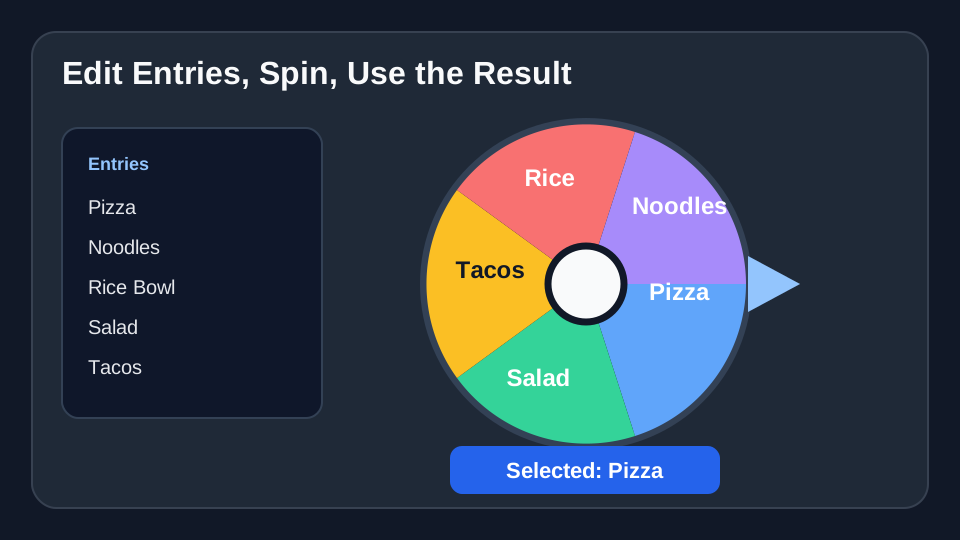
A wheel can only choose from the entries on it. If one username appears twice, it has two chances. If an eligible ticket never made it onto the list, the wheel has no way to select it.
The spin can be random while the setup is unfair. Fairness comes from clean entries, clear eligibility, duplicate rules, and a result rule that people hear before the spin.
For classrooms, raffles, meetings, and public draws, show the list before spinning and keep the selected result visible long enough for the room, stream, or call to read it.
For winner selection, ClickTheWheel uses the browser cryptographic random API when the device supports it. The wheel animation still exists to make the result visible and readable.
In a simple wheel, each visible entry slice is one opportunity to be selected. If every eligible person appears once, each person has the same starting chance. If someone appears three times, they have three entries. That may be correct for bonus-entry contests, but it should be intentional, published, and easy to explain before the draw.
Maria, Jules, Sam, and Tina each appear once. This is the cleanest setup for one-person-one-chance drawings, class turns, or small office raffles.
Maria appears three times because the rules allow bonus entries. This can be fair only if the bonus rule was published before entries were collected.
People often judge randomness by how it feels, but random results can repeat, cluster, or surprise people. These examples explain the setup before the spin so the result is easier to understand afterward.
1 out of 10 per name
If every name appears once, each person starts with the same chance for that spin.
2 out of 11 for the duplicated name
A duplicate line acts like an extra chance. That can be intentional for bonus entries, but it should be explained.
Remove each winner after selection
The first winner should leave the wheel before the second prize if one person can only win once.
Remove after each turn
Removing selected students helps the class see that turns are being spread out before repeats.
Trust improves when the site is clear about what the wheel can prove and what still belongs to the host. ClickTheWheel should make the selection visible, not pretend to verify facts it cannot see.
It can show the entries, animate the spin, display the selected result, keep result history, and export a plain draw report or CSV.
It cannot know whether a spreadsheet was complete, whether a social comment was deleted, whether a ticket was eligible, or whether a private rule was changed before the spin.
ClickTheWheel is not a certified lottery machine, legal audit system, or regulated prize-draw platform. Use it for visible random selection where your rules allow a wheel picker.
A clean list, visible final count, clear duplicate rule, unchanged list during the spin, readable winner modal, and result log.
Result history helps show what happened after the spin. It is useful for multiple winners, classroom turns, presentation order, and prize tiers. It does not prove that the original entry list was complete or that every participant was eligible. That proof comes from the preparation around the wheel.
Open the Fair Draw Toolkit