Use case guide
Chore Assignment Wheel (Family + Roommates)
Assign chores fairly each week using a wheel with simple rotation rules.
Quick setup
Chore Assignment Wheel works best when families or households need a visible way to choose from real options, not a hidden or arbitrary pick. Start with a clean Home list, decide the rule before the spin, and use the result consistently so everyone understands why that option was selected.
- Create a list of eligible Home options before opening the wheel.
- Remove anything unavailable, duplicated by accident, private, or outside the rules for this Family use case.
- Choose whether the selected entry should stay on the wheel or be removed after the result.
- Spin once, announce the result, and keep a simple record if other people need proof later.
Real setup example
Family chore wheel for 5 people
A household assigns weekly chores from a short list. Everyone sees the task pool before the wheel starts.
Setup
- List only chores that are due this week.
- Separate very hard chores or rotate them manually.
- Remove assigned chores until the weekly list is complete.
- Save the final assignment in a family chat or calendar.
Spin rule
Spin for one chore at a time, assign it, remove it, and continue until all weekly tasks are assigned.
Proof note
A screenshot of the assignment order is enough for household accountability.
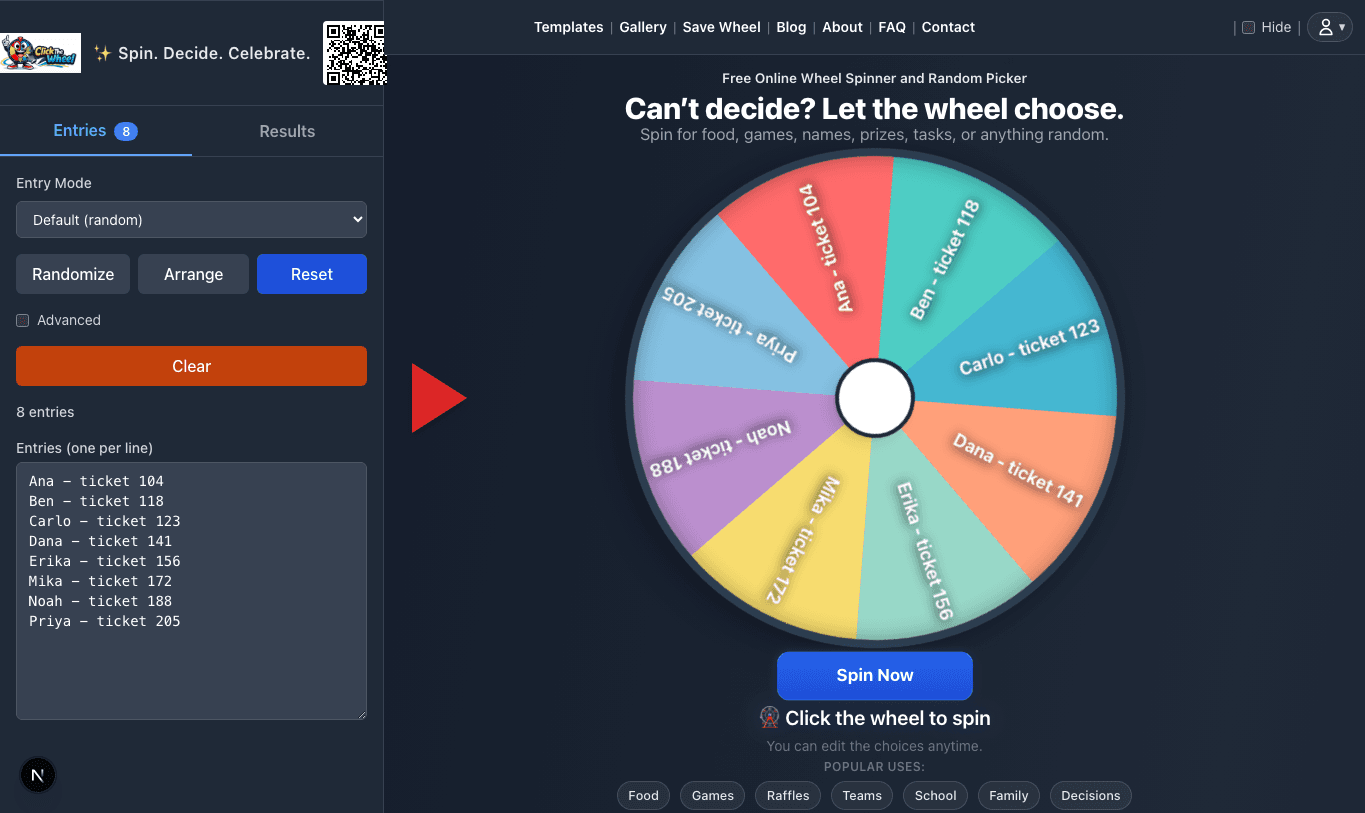
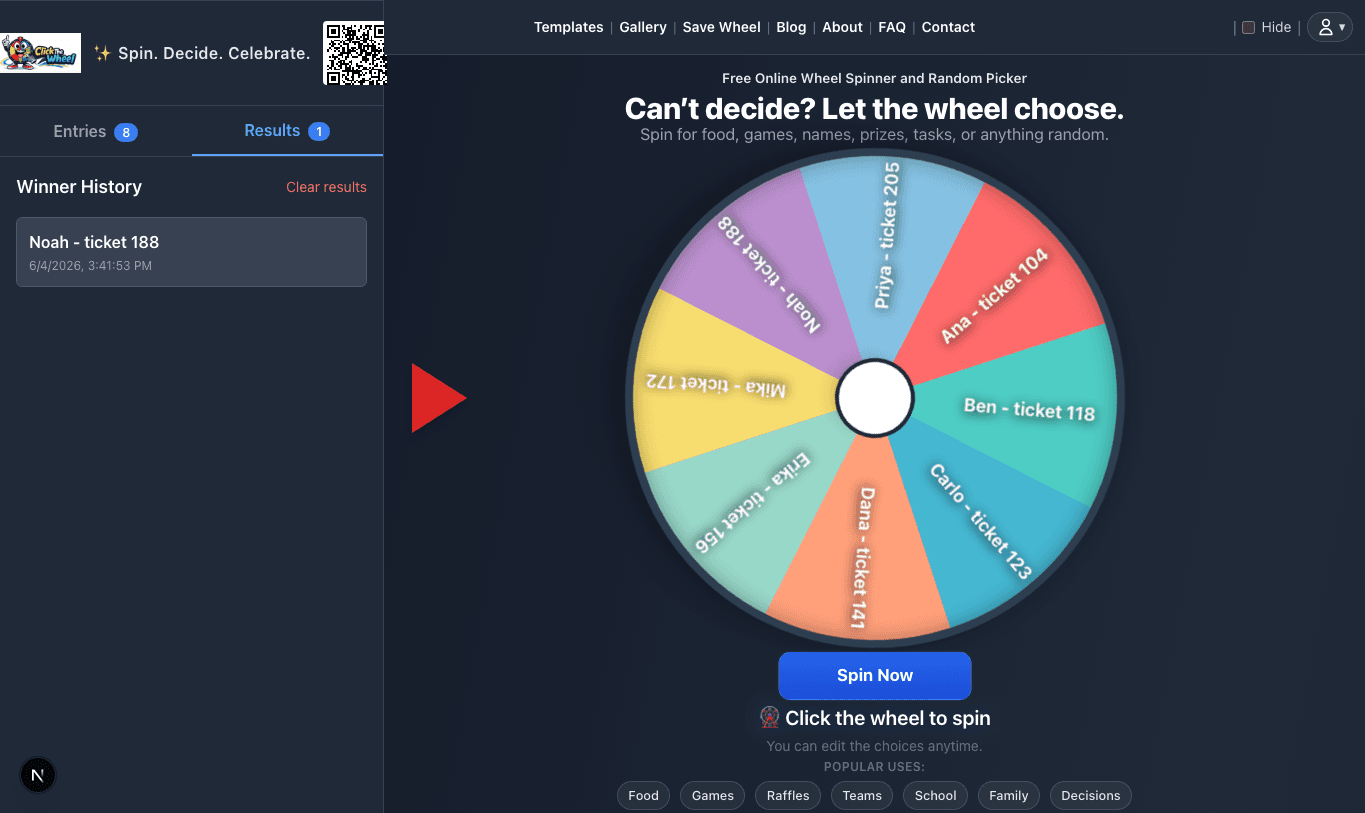
Setup chores
The smoothest workflow for Chore Assignment Wheel is to prepare the list first, then spin in front of the people affected by the result. Editing the wheel while people are waiting can make the process feel less neutral.
For Chore Assignment Wheel, use remove-after-win when you need a rotation, turn order, or multiple winners. Keep the selected entry on the wheel when repeats are allowed or when every spin is independent, such as choosing a new prompt or activity category.
- Paste entries one per line.
- Preview the wheel labels on the screen size you will use.
- Decide re-spin rules before the first spin.
- Announce the selected entry exactly as it appears on the wheel.
Fair distribution
Fairness for Chore Assignment Wheel starts before the spin. The wheel should contain the agreed options, the same eligibility rule should apply to everyone, and accidental duplicates should be removed unless you intentionally want weighted odds.
For Chore Assignment Wheel, it helps to say the Home and Family rule out loud: who is eligible, what happens after a result, and whether previous winners or selected options are removed. That small explanation prevents most disputes later.
- Check the Home, Family, Roommates list before the wheel is shown.
- Use one entry per eligible option unless weighting is part of the published rule.
- Remove the selected entry for multi-round picks when repeats would be unfair.
- Save or screenshot the result when the outcome affects a group, prize, roster, or schedule.
Weekly reset
Weekly reset is where Chore Assignment Wheel becomes more than a random click. Use this section to turn the general idea into a list that fits your people, timing, and situation.
For Chore Assignment Wheel, the wheel works best when families or households can see the Home and Family choices and understand the result. Review the list, remove weak options, spin once, and treat the selected entry as the next agreed action.
Exceptions
Exceptions is where Chore Assignment Wheel becomes more than a random click. Use this section to turn the general idea into a list that fits your people, timing, and situation.
For Chore Assignment Wheel, the wheel works best when families or households can see the Home and Family choices and understand the result. Review the list, remove weak options, spin once, and treat the selected entry as the next agreed action.
Example lists
A strong Chore Assignment Wheel list mixes specific entries with a few flexible fallbacks. For example, entries like "Outdoor game", "Family walk", and "Feed pet" are clear enough to act on immediately after the spin.
Keep each Chore Assignment Wheel label short, visible, and easy to explain. If your Home and Family list is long, split it into smaller rounds or group entries by difficulty, budget, person, prize tier, or time required.
- Clear table
- Toy cleanup
- Feed pet
- Reading time
- Outdoor game
- Laundry help
Common questions before you spin
Chore Assignment Wheel is simple, but the rule around the spin matters. Tell participants what the wheel represents, when a re-spin is allowed, and whether the result is final before anyone sees the pointer move.
For Chore Assignment Wheel, the safest default is to use the wheel for choices that are already acceptable in Home and Family. If an option would be unfair, unsafe, unavailable, or outside the original agreement, remove it before spinning instead of fixing the result afterward.
Example wheel entries
These starter entries for Chore Assignment Wheel are intentionally plain text so you can paste them into ClickTheWheel, rename them for your situation, and remove anything that would not be a valid result.
- Clear table
- Toy cleanup
- Feed pet
- Reading time
- Outdoor game
- Laundry help
- Training command
- Family walk
FAQ
What should I put on a Chore Assignment Wheel?
Add real Home options to Chore Assignment Wheel that you would be willing to accept if the wheel selects them. Remove joke entries, unavailable choices, private information, and anything that would require a manual override after the spin.
Should I remove the winning entry after a spin?
For Chore Assignment Wheel, remove the selected entry when repeats would be unfair, such as turn order, prize draws, chore rotation, or balanced participation. Keep it when each spin is independent, such as picking a prompt, topic, meal idea, or activity category.
How do I keep this fair for Family?
Use the same rule for every Chore Assignment Wheel entry, explain the rule before spinning, and show the list when other people are affected by the result. For Home and Family, a transparent setup matters as much as the random selection itself.
Can I reuse this wheel later?
Yes. Save the Chore Assignment Wheel list or keep a copy of the entries, then update it when people, constraints, prizes, tasks, or plans change. families or households usually get better results from a maintained wheel than from rebuilding one in a hurry.