By Guest, Contributor to ClickTheWheel
Updated: May 2026
Category: Classroom
Reading time: 7–8 minutes
A classroom can become lively for the smallest reasons.
A marker drops. A student makes a funny comment. Someone gets the answer right after three guesses, and suddenly the whole room wakes up.
That same energy is what makes a classroom wheel useful.
A teacher can open a wheel, show a few names or review questions, and the class immediately pays attention. Some students laugh. Some hope their names do not appear. A few absolutely hope their names do appear.
But there is a line.
A spin wheel can create excitement, but too much excitement can turn into noise. A wheel can encourage participation, but if used badly, it can make shy students uncomfortable.
The goal is not just to use a wheel. The goal is to use it well.
That is where ClickTheWheel can help teachers, tutors, trainers, homeschool parents, and student leaders create small moments of surprise without losing control of the room.
For a faster start, browse the ClickTheWheel Examples Library.
Table of Contents
- Why classroom wheels work
- The simple rule
- Random student participation
- Review question wheel
- Group assignment wheel
- Brain break wheel
- Reward wheel
- Classroom job wheel
- Reading wheel
- Exit ticket wheel
- Vocabulary wheel
- Movement wheel
- Common mistakes
- Checklist
- FAQ
- Final thoughts
Why Classroom Wheels Work
A wheel creates suspense.
Students do not always get excited about another review question. But when the question is chosen by a wheel, the moment feels different.
The wheel can help with:
- participation
- attention
- quick reviews
- routines
- group work
- warm-ups
- brain breaks
- reward systems
It gives the lesson a spark.
The Simple Rule
Use the wheel to invite participation, not to embarrass students.
Instead of:
“If your name lands, you must know the answer.”
Try:
“If your name lands, you can answer, ask a partner, or choose a hint.”
That keeps the activity playful.
Random Student Participation
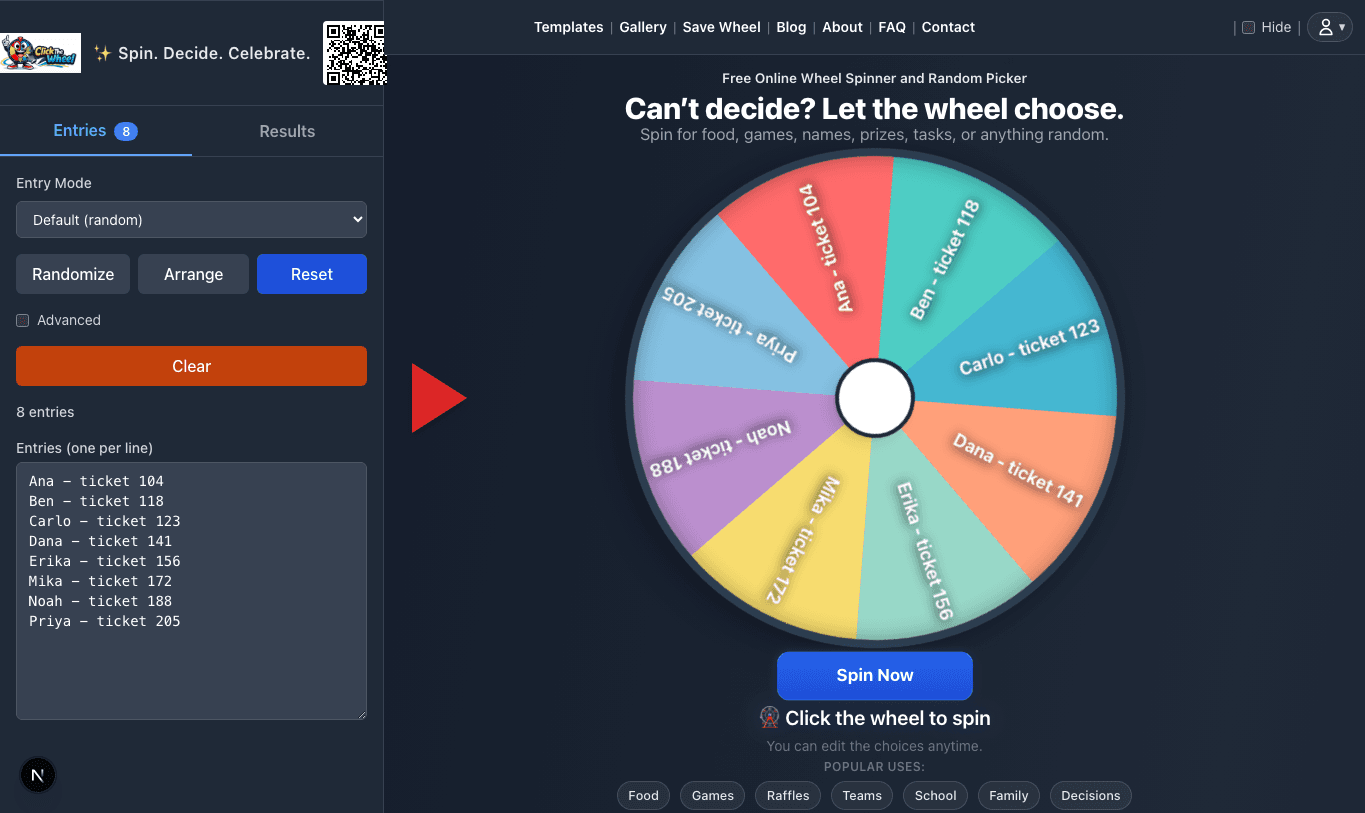
Add student names and spin to choose who answers, reads, shares, or starts.
Ana
Ben
Carlo
Dana
Erika
Remove a student’s name after participating if the goal is fair turns.
Review Question Wheel
Add question numbers or topics:
Fractions
Vocabulary
Main idea
Grammar
Problem solving
Bonus Question
Spin, then ask a related review question.
Set rules before spinning:
“Wait until the wheel stops. Raise your hand. No shouting answers.”
Group Assignment Wheel
Use a wheel for roles:
Leader
Presenter
Writer
Timekeeper
Reporter
Materials Manager
This reduces arguments because the wheel makes the choice feel neutral.
Brain Break Wheel
Use quick reset activities:
Stretch for 30 seconds
Silent breathing
Desk drumroll
Quick doodle
Shoulder rolls
Keep breaks short so the class can return to learning.
Reward Wheel
Use small rewards:
Choose a class song
Extra 3 minutes break
Pick the next activity
Sticker reward
Bonus point
Avoid making rewards too big. The lesson should still matter.
Classroom Job Wheel
Rotate jobs fairly:
Board cleaner
Paper collector
Tech assistant
Line leader
Materials helper
For older students, use roles like discussion lead, timekeeper, or group reporter.
Reading Wheel
Use reading options:
Read one sentence
Read with a partner
Choose a classmate to help
Pass once
Summarize silently
This keeps reading participation supportive.
Exit Ticket Wheel
End class with prompts:
One thing I learned
One question I still have
One real-life example
One thing I found difficult
This gives a structured ending and quick feedback.
Vocabulary Wheel
Practice vocabulary with tasks:
Define the word
Use it in a sentence
Give an antonym
Draw it
Act it out
Students use words in different ways, not just memorize.
Movement Wheel
Use safe movement prompts:
Stand up, sit down
5 shoulder rolls
10-second stretch
Silent clap pattern
Freeze pose
Avoid running, pushing, or activities that disrupt the room.
Common Mistakes
Using the wheel to embarrass students
Keep options supportive.
Spinning too often
Use the wheel as a spark, not the entire lesson.
Not explaining rules
Students should know what happens after the wheel stops.
Making rewards too big
Small rewards work better.
Ignoring comfort levels
Give shy students safe ways to participate.
Classroom Wheel Checklist
- [ ] The activity has a clear purpose.
- [ ] Entries are age-appropriate.
- [ ] Students understand the rules.
- [ ] The activity supports the lesson.
- [ ] Students have respectful options.
- [ ] The wheel will not take too much time.
- [ ] There is a clear ending.
When ClickTheWheel Helps
ClickTheWheel gives teachers and trainers a quick way to turn ordinary classroom decisions into engaging moments.
Browse the Examples Library for classroom, review, icebreaker, and activity wheels.
FAQ
Can I use a spin wheel for student names?
Yes. Use it for participation, reading, sharing, or group roles.
Should I remove names after picking?
If the goal is fair participation, yes.
Is it good for shy students?
It can be, if you allow hints, partners, or pass options.
What activities work best?
Short activities like review questions, roles, brain breaks, rewards, and exit tickets.
How do I keep students calm?
Set rules before spinning and keep the activity short.
Final Thoughts
A classroom wheel can change the energy of a lesson in a good way.
It can turn a normal question into suspense. It can make review time more playful. It can help students participate without the teacher always choosing the same volunteers.
Start with one small activity on ClickTheWheel, or browse the Examples Library for ready-made classroom ideas.
The wheel brings the spark. The teacher brings the structure.
Relevant app screenshots
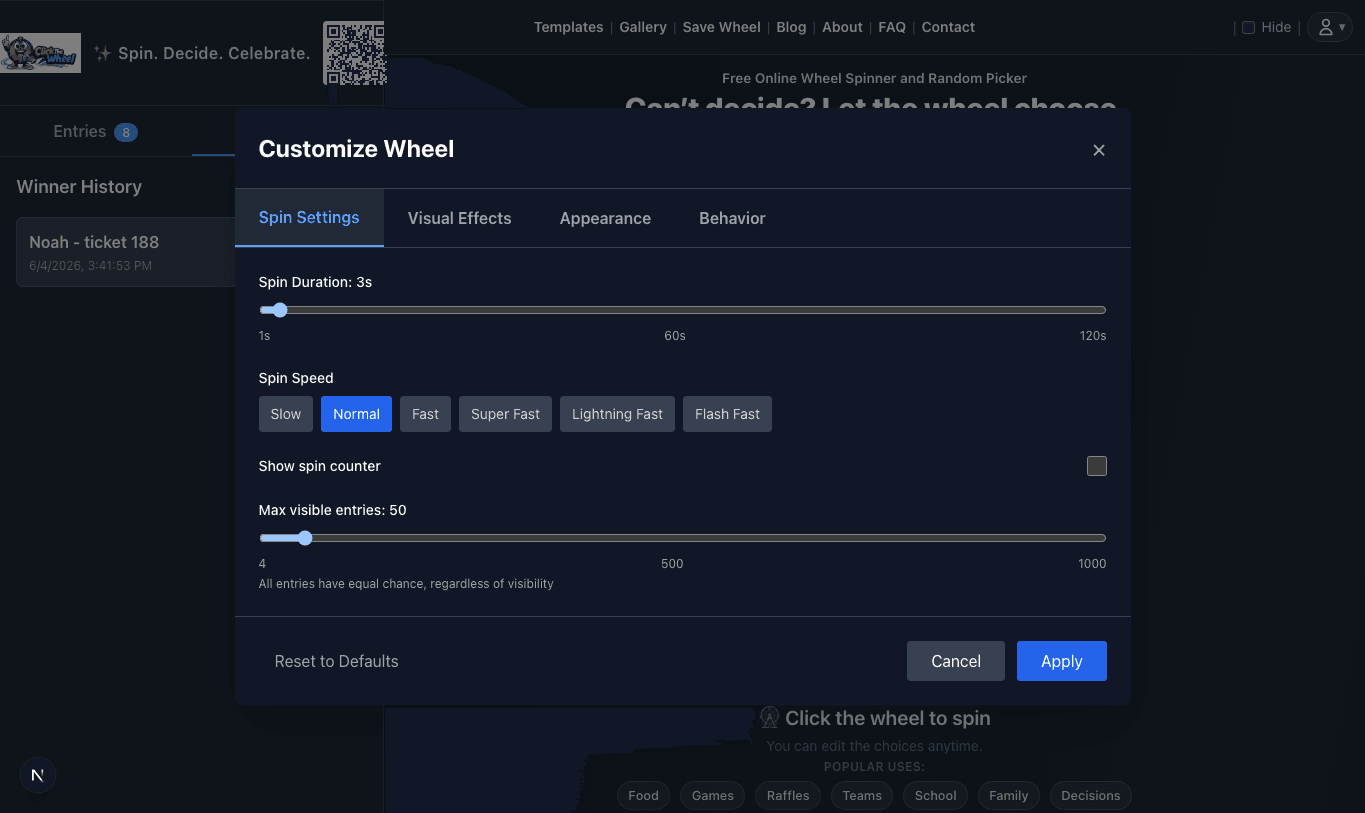
These screenshots are shown only for articles where the image directly supports the classroom workflow: setup, result proof, result history, or settings. They are not generic decorations.